Corporate

UNOC and Government Partners Tour EACOP Infrastructure in Tanzania

Published: October 8, 2026
UNOC and Government Partners Tour EACOP Infrastructure in Tanzania

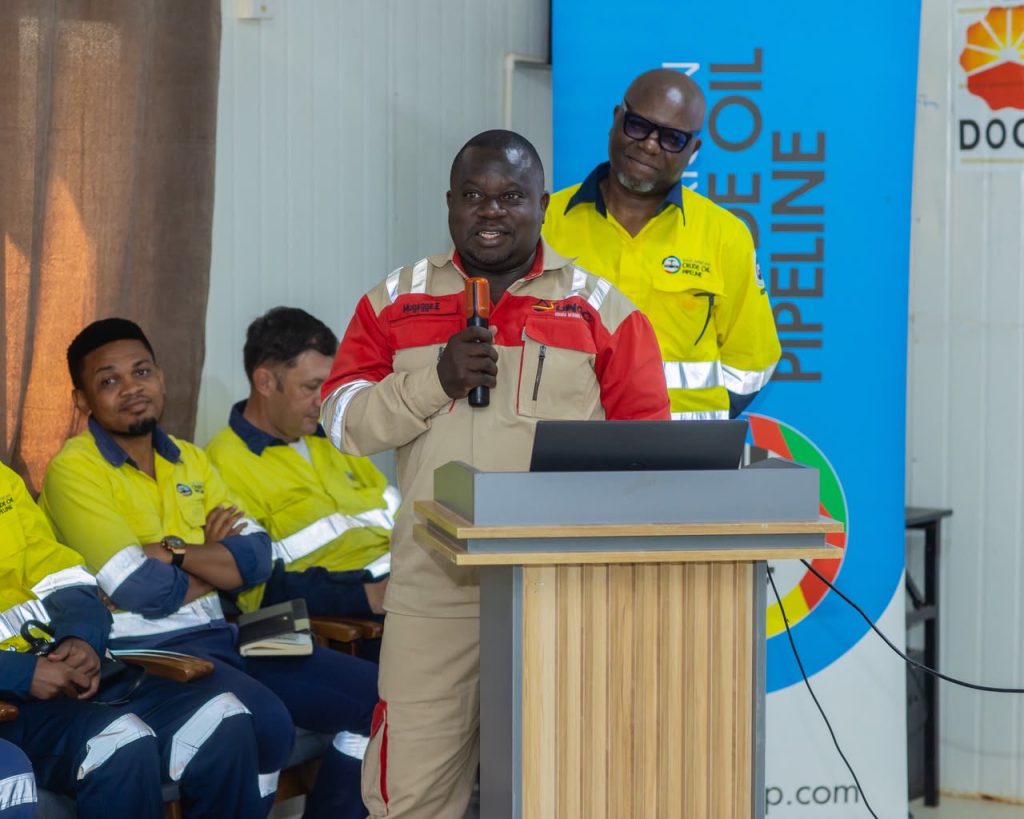
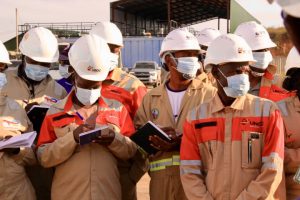
This week, UNOC, together with the Office of the Auditor General and key Government stakeholders, undertook a technical tour of the EACOP project infrastructure in Tanzania. The delegation engaged project management on implementation milestones and challenges.

From the marine terminal to the storage tanks, the visit offered a closer look at the infrastructure that will enable Uganda’s first oil exports, and at the progress being made to turn years of project development into a functioning export system.

Corporate

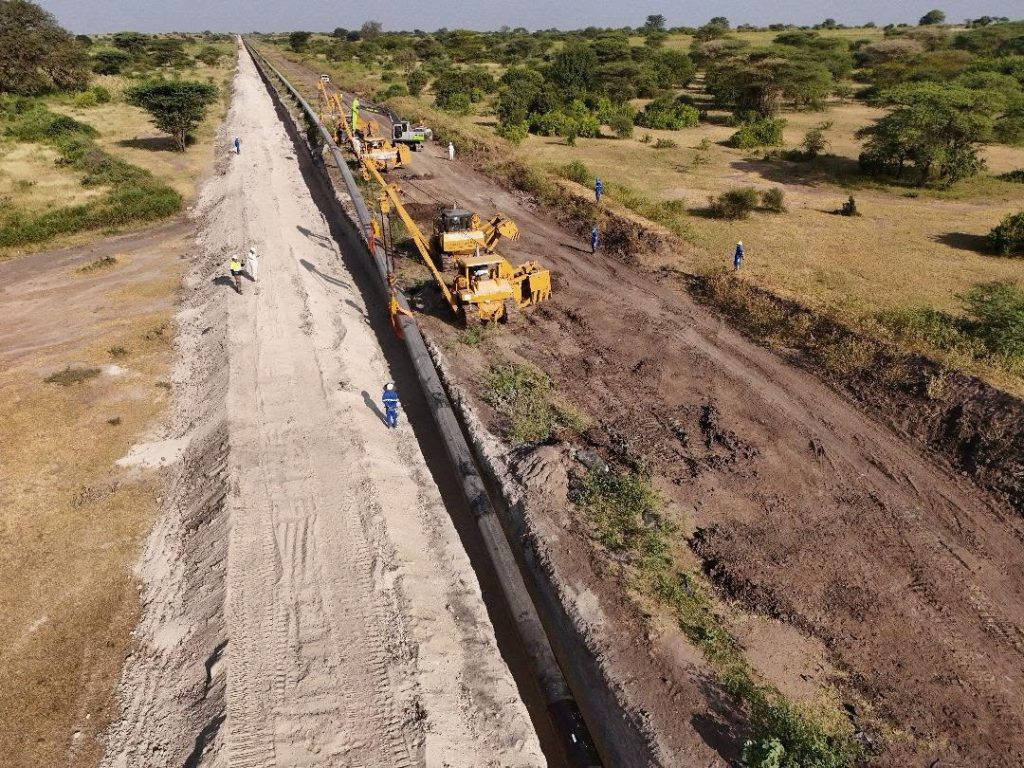
Ongoing laying of the EACOP

Published: October 8, 2026
Ongoing laying of the EACOP
Ongoing laying of the EACOP, one of our key projects.
Some key facts:
-Has a 30-meter corridor a.k.a. right of way.
-Buried one to two meters deep.
-Leak/intrusion detection system.
-Real-time monitoring.
Corporate

UNOC Closer to Acquiring a License for Oil Exploration

Oil & Gas in Uganda

Published: October 2, 2026

OUR dream of exploring oil in Uganda, is steadily and gradually coming true.

Weeks ago, we were named among four companies, which impressed officials in the second licensing round.

The second licensing round pertains to five oil blocks in the Albertine Graben, Western Uganda. The available blocks are Ngaji, Turaco, Avivi, Kasuraban and Omuka.

A statement on the website of the Ministry of Energy and Mineral Development (MEMD) reads, “The country’s second oil and gas licensing round for the exploration of five blocks in the Albertine Graben-Uganda-aims increase international investments in Uganda’s oil rich energy sector, with Government expecting to sign Production Licensing Agreements and issue exploration licenses to successful firms by December 2020.

“The second licensing round is driven by factors including establishment of additional petroleum resources and reserves, the current high price of crude oil, interest in investing in the country’s oil and gas sector, a conducive investment climate and minimal geological commercial risk.”

Responding to MEMD’s notice of request for qualification, on September 20th, 2020, UNOC applied.

“Participating in the Second Licensing Round is well in line with UNOC’s ambitions of eventually attaining the required capacity to become an operator,” stated the Chief Executive Officer, Proscovia Nabbanja.

Following perusal of UNOC’s submission, in a letter, MEMD Permanent Secretary, Robert Kasande broke the news-UNOC was among four shortlisted applicants.

Others are PetroAfrik Energy Resources East Africa Limited, a local company, Total E &P, Activites Petroliniers (France) and DGR Global Limited from Australia.

The four companies will participate in the request for proposal, a biding stage expected to end in June 2021 before licensing in December 2021. Licensing is preceded by negotiation of production sharing agreements.

Licensing UNOC, according to Chief Legal and Corporate Affairs Officer, Peter Muliisa, would enable the Company to participate in exploration as a state-owned company and participate in exploitation.

Thus far, the Government, through MEMD, has awarded nine production licenses. Specifically, one petroleum production license (PL) for the Kingfisher field to China National Offshore Oil Company. In 2012, five PLs were regarding Mputa-Nzizi-Waraga, Kasamene-Wahrindi, Kigogole Ngara, Nsonga and Ngege fields were awarded to Tullow Uganda Operations (which has since sold its assets to Total E&P). In 2016, three PLs regarding Ngiri, Jobi-Rii, and Gunya fields were issued to Total.

These are basis of the impending production and attendant infrastructure like the refinery, multi products pipeline and East African Crude Oil Pipeline among others

The UNOC mandate, among others, includes identifying and involvement in oil exploration in what is termed as reserves replacement. Important to note is that oil is a depletable resource, hence the need to identify and explore new areas.

END

Corporate

UNOC Empowers Girls Ahead of Increased Oil and Gas Activities in the Albertine Graben

Oil & Gas in Uganda

Published: October 2, 2026

LIKE many school-going girls in Uganda, Susan Ahumuza faces challenges, which could deny her reaching the education summit.

Early, unplanned pregnancies, lack of school fees and the lure of older men with money are some of the stumbling blocks along her path.

Ahumuza is among hundreds of students at Butiaba Seed Secondary School in Buliisa. Buliisa is one of two districts the Tilenga oil and gas project straddles.

As activities in the oil and gas sub-sector intensify, following the final investment decision by the joint venture partners, there’s concern about the impact these activities might have on the girl-child.

The Uganda Demographic and Health Survey 2011 indicates that 49% of women aged 20-49 were married before they were 18, while 15% were married by the age of 15. This is also closely linked with a high rate of teenage pregnancy (24%), among the highest in Africa, according to UNICEF Uganda.

Additionally, practices such as underage marriage, poor sexual reproductive education and disempowerment of girls are rife in Buliisa and nearby districts.

A population increase, resulting from the on-going development and construction at the key oil and gas projects, could exacerbate this situation.

Cognisant of potential challenges and the risks posed by increased oil and gas activity, the Uganda National Oil Company (UNOC) has started a campaign on keeping the girl-child in school.

The UNOC team was led by the CEO, Proscovia Nabbanja, who visited six schools on February 22nd and 23rd, 2022. The schools were Butiaba Seed Secondary School (Buliisa), Kiziranfumbi Secondary School (Kikuube) and Buseruka Secondary School (Buseruka). The other schools were Duhaga Secondary School (Hoima), St. Thomas Secondary School (Hoima) and Kigorobya Seed Secondary School.

Her mission was to equip, prepare, and empower students especially girls with the skills and knowledge needed to resist distraction and remain in school.

Key in her message were the “4Ds” namely desire for learning, dedication, determination, and discipline. These, she stressed, were crucial if students were to complete school.

According to Nabbanja, ensuring that girls complete school, is a priority for UNOC because no society would achieve its full potential if its students, especially girls are overlooked.

“We need to intentionally place girls at the centre of the economy’s development or else we will lose opportunities to maximize our impact across all the sectors,” Nabbanja argued.

As she spoke, Nabbanja had up close interaction with the students, ensuring effective communication. The key highlight of this interaction was the handover of netballs and books titled “The Girl-Child: Growing Into A Woman Of Value”. The book highlights the difficulties girls face, how they could avoid them and examples of successful women in Uganda.

Following the pep talk, the students appreciated Nabbanja and her team.

“We thank UNOC for their kind words of encouragement and motivation,” excited Ahumuza stated.

“We have several challenges as school going children in Bunyoro region but with the support of the oil companies, we hope to have a better education and improved standard of living.”

Samuel Kakande, a student at Duhaga Secondary School, concurred.

He said, “We are happy with this program because if all of us, including our sisters and friends remain in school, it would enable us to get opportunities in the future and be successful in life.”

“It will also change the lives of many, many families”.

“I am thankful that my parents have fought to find the means to send me and my seven siblings to school. I am now encouraged, and I am hopeful to stay and excel in school so that I can make them proud,” said Jenny Namakula, a student at Kigorobya Seed Secondary School. In all, Nabbanja met with over 4,000 students in the six schools.

The Buseruka Secondary School Headteacher, John Bosco Tibaijuka appreciated UNOC’s effort, saying the Company was the first entity to visit and deliver such to deliver such messages to students. END

Corporate

UNOC Celebrated 10 Years Of Driving Uganda’s Transformation In The Petroleum Sector

Oil & Gas in Uganda

Published: October 2, 2026

WhatsApp Image 2025-12-20 at 2.15.50 PM (2)

UNOC celebrated 10 years of driving Uganda’s transformation in the petroleum sector, growing from a bold idea into a fully-fledged, high impact national oil company shaping the country’s energy future.

UNOC was created to manage the State’s commercial interests and unlock the full value of Uganda’s petroleum resources. Over the past decade, the company has built strong foundations in governance, institutions, people, and partnerships, setting the stage for long-term national value creation.

From the inaugural Board to the new leadership constituted in 2024, UNOC has benefited from visionary governance and committed management that has steered multi-billion-dollar projects, strengthened systems, and sustained institutional integrity.

Speaking at the event, our CEO Ms. Proscovia Nabbanja, said this:

UNOC’s Corporate Strategy journey, from foundation (FY2019/20–FY2023/24) to accelerated growth (FY2024/25–FY2029/30), has seen the Company:

– Establish strong institutional systems, clarity of purpose, and shareholder confidence.

– Drive key upstream projects, including Tilenga, Kingfisher, and Kasuruban exploration blocks.

– Advance critical midstream initiatives such as EACOP, Uganda Refinery, and Kabalega Industrial Park, with steady progress on infrastructure, financing, and partnerships.

I am proud of the work we have accomplished here. As we celebrate this milestone, we acknowledge that UNOC’s journey is built on visionary leadership, dedicated management, and committed teams across all departments.

Together, we continue to advance our mission: “Creating Value for Generations”, delivering sustainable growth, operational excellence, and socio-economic transformation for Uganda.

Here’s to the next decade of growth, impact, and value creation!

Corporate

UNOC forms the Alliance for Climate Resilience to Combat Climate Change

Oil & Gas in Uganda

Published: October 2, 2026

On Wednesday 30th August at the Serena Kampala Hotel, a transformative event unfolded —the birth of the Alliance for Climate Resilience (ACR). This wasn’t just another launch; It was the response to a crisis that knows no borders, a battle cry against climate change. The alliance is one forged in the crucible of global warming, one that is going to require relentless dedication, national unity, and audacious commitments.

At its helm is the Uganda National Oil Company (UNOC) determined to lead by example. The ACR’s vision is clear: to operate their businesses with an unwavering commitment to the environment and society, not just within the confines of their workplaces, but throughout the very communities the oil and gas projects touch.

In pursuit of this vision, UNOC meticulously crafted an Environmental, Social, and Governance (ESG) Strategy, a roadmap with six critical priorities. Among these priorities, the Alliance for Climate Resilience shone as a beacon of hope. This initiative was a rallying cry for stakeholders from both public and private sectors, international development partners, environmental funds, carbon market players, and more. Together a sustainable response to climate change has been formed, emphasizing both mitigation and adaptation.

During the launch of ACR, UNOC’s ESG lead, Dr Michael Mugerwa communicated that a reforestation and afforestation plan has been formed aimed at planting 40 million trees across 40,000 to 100,000 hectares. Forestry, once ravaged, will now be restored to its former glory. It is important to note that the project is not just about aesthetics; it was about tackling the 1,000,000 metric tons of greenhouse gas emissions that will result from Uganda’s crude oil refining.

The Alliance’s mission spans far beyond planting trees. It encompasses fostering climate-related local content, aligning projects with global and national climate goals, ensuring equitable benefits for communities, attracting investments, and working across sectors like agroforestry, industrial decarbonization, and clean cooking.

The Alliance for Climate Resilience is clearly more than just a lofty concept; it has tangible objectives. It aims to bolster carbon emissions uptake through forest and wetland conservation, galvanize climate financing, support local communities against climate-related perils, champion clean cooking methods, spread grassroots awareness about climate change, and elevate Uganda’s global prominence in the fight against climate change.

As the historic event wound down, Minister of Energy and Mineral Development, Nankabirwa Ruth spoke passionately. She emphasized the delicate balance between conservation and development, and how the Alliance could pave the way for projects like oil and gas to coexist harmoniously with the environment.

Board member Zulaika Kasajja, standing in for UNOC’s Chairman, Emmanuel Katongole, voiced unwavering confidence. The Alliance, she affirmed, held the key to lasting solutions against climate change’s relentless march.

But perhaps the most compelling words came from UNOC’s CEO, Proscovia Nabbanja. She refused to let climate change remain a distant threat. Quoting the Global Forest Watch, she delivered a sobering reality: Uganda had lost over a million hectares of tree cover since 2000, leading to colossal CO2 emissions. The recent deforestation alerts, almost 63,000 in a matter of days, were a deafening alarm bell.

The statistics aren’t just numbers; they are a stark testament to the urgency of the situation. The statistics are a call to action, a call to rally behind the Alliance for Climate Resilience, and a call to confront the present reality of climate change with unyielding collaboration and resolve.

Corporate

UNOC @10: A Decade of Progress and Transformation In Uganda’s Oil and Gas Sector

Oil & Gas in Uganda

Published: October 2, 2026

This June 2025, the Uganda National Oil Company (UNOC) marks a significant milestone, a decade of operation since its establishment in 2015. Over the past ten years, UNOC has not only shaped Uganda’s oil and gas industry but has also undergone remarkable internal growth and transformation. From its humble beginnings with a single staff member in Uganda to a workforce of over 200 professionals with operations in Kenya, UNOC has evolved into a robust institution, driving Uganda’s energy sector forward while ensuring sustainable development and national prosperity.

UNOC was established under the Petroleum (Exploration, Development, and Production) Act, 2013, and the Petroleum (Refining, Conversion, Transmission, and Midstream Storage) Act, 2013, with a clear mandate to manage Uganda’s commercial interests in the petroleum sector and ensure the resource’s optimal value for the benefit of all Ugandans. Since its incorporation, UNOC has expanded its operations, established subsidiaries, and developed strategic partnerships with international oil companies, financial institutions, and technology providers. These efforts have been guided by a robust corporate strategy, which has been meticulously executed to position UNOC as a key player in the regional energy sector.

UNOC’s leadership and governance structures have been pivotal in ensuring the company’s efficient and effective management. Governed by a competent Board of Directors and business-driven shareholders, the company has maintained transparency and accountability in its operations. UNOC has two subsidiaries, namely The National Pipeline Company (NPC) in charge of pipelines, the sole importation of the country’s petroleum products, and storage terminals. Additionally, the second subsidiary, the Uganda Refinery Holding Company (URHC) is tasked with the role of constructing the country’s 60,000 barrels per day refinery and managing the Petrochemical industrial park to be built in Kabaale, Hoima. This strong governance framework has enabled UNOC to navigate the complexities of the oil and gas sector while maintaining a focus on sustainable development.

Through hard work, a results-driven culture, and commitment to targeted, measurable goals, UNOC has continuously raised the bar in strategic performance. This dedication was recognized in 2023 when the company received the prestigious Balance Scorecard Institute Award for Excellence, highlighting its outstanding achievements in strategic performance management. The award underscores UNOC’s strong focus on operational excellence, strategic planning, and effective execution of its mandate.

As the National oil Company, UNOC is committed to integrating Environmental, Social, and Governance (ESG) principles into its operations to foster sustainable and responsible growth. The company has developed a comprehensive ESG strategy, which includes a detailed Environmental and Social Safeguards Management framework. This framework is designed to minimize its environmental footprint, promote biodiversity conservation, and ensure sustainable development throughout its operations.

In the environmental aspect, the company has launched the Alliance for Climate Resilience (ACR) initiative, which has successfully planted nearly 10,000 trees to date, with an ambitious target of planting 40 million trees. On the social front, UNOC annually engages with local communities and district leadership to provide updates, create opportunities, and secure social buy-in for the company.

Development of Key Projects

Over the past 10 years, UNOC has been at the forefront of key projects that are transforming Uganda’s oil and gas sector. Among these is the Kingfisher project, which has a capacity of 40,000 barrels per day, and the Tilenga project, with a production capacity of 190,000 barrels per day. In both projects, UNOC holds the government’s interests of 15% respectively as a key partner. Additionally, UNOC is playing a pivotal role in the East African Crude Oil Pipeline (EACOP), a 1,443-kilometer pipeline designed to transport Uganda’s crude oil from the Albertine Graben to the Tanzanian port of Tanga for export. UNOC holds a 15% equity stake in this $3.5 billion project, reinforcing Uganda’s commitment to maximizing local participation and benefits. These projects have reached significant milestones, including securing financing agreements, obtaining land access through fair and transparent compensation processes, and advancing construction activities.
Since its inception in 2015, one of the flagship projects that UNOC has been leading is the Refinery. Designed to process 60,000 barrels of crude oil per day, this state-of-the-art facility aims to meet both domestic and regional petroleum product demand. By doing so, it will significantly reduce Uganda’s reliance on petroleum imports and strengthen energy security. UNOC has made significant progress on this front by successfully negotiating key agreements, including the Project Framework Agreement and the Shareholders’ Agreement.
In further progress towards the development of the Refinery Project, UNOC has recently signed an Implementation Agreement with Alpha MBM Investments. This agreement formalizes the next phase of collaboration between UNOC and the selected lead investor, paving the way for the final investment decision and detailed engineering design. The signing marks a critical milestone in realizing Uganda’s vision of domestic petroleum refining and represents UNOC’s commitment to attracting credible and strategic investment partners to the project.
To ensure the country’s reserves replacement, UNOC acquired its own license for the Kasuruban Exploration Block, the largest among the five blocks announced in Uganda’s second licensing round. This acquisition underscores UNOC’s commitment to expanding Uganda’s hydrocarbon resource base and contributing to the country’s energy security. Since then, UNOC has conducted geological and geophysical studies, leveraging advanced exploration technology to de-risk the block and attract global joint venture partners.

Strategic Petroleum Storage and Distribution

Uganda currently has a petroleum storage capacity of approximately 170 billion litres of petroleum. To further enhance energy security, UNOC is making significant investments in expanding strategic petroleum storage and distribution infrastructure. The company currently manages the Jinja Storage Terminal, which has a capacity of 30 million litres. In addition, UNOC has acquired land in Mpigi to build a new petroleum storage terminal with a capacity of 320 million litres. This new facility will serve as a hub for refined products coming through the Hoima-Kampala multi products pipeline, significantly increasing the nation’s storage capacity and bolstering energy resilience.
UNOC has significantly expanded its operations and increased its importation capacity to support Uganda’s growing demand. Initially, the company began with the bulk importation of 100,000 litres of petroleum products before scaling up its operations to 1 million litres. As at mid-March 2025, the company had imported 1.9 billion litres. This explosive growth is a testament to UNOC’s strategic vision and commitment to expanding its footprint in the energy sector. These efforts were further strengthened in 2023 when the Petroleum Supply (Amendment) Act was enacted, empowering UNOC as the sole importer of all petroleum products bound for the Ugandan market.
UNOC’s involvement in the importation of petroleum products has streamlined the supply chain, eliminated intermediaries, and reduced unwarranted transactions, leading to operational efficiencies and cost savings. This milestone marks a significant turning point in Uganda’s petroleum sector. As the sole importer, UNOC now plays a central and transformative role in securing the country’s energy supply, ensuring price stability, and fostering transparency in the fuel distribution chain. This new role has elevated UNOC’s strategic importance in national planning and positioned the company as a key enabler of energy security and economic resilience.

Industrial and Economic Impact

Through projects like the Uganda Refinery, Kabalega International Airport and the Kabalega Industrial Park, UNOC is set to spur industrialization in the Albertine region. These initiatives are expected to create a great number of jobs to boost local content and contribute significantly to Uganda’s GDP. A macroeconomic study on the impact of the refinery highted that its existence would lead to a GDP impact of $3.4 billion, a National Capital Formation Impact of $8.3 billion, the employment of 32,000 Ugandans, an annual Balance of payment (BOP) impact of $591 million and a fiscal impact of $804 million. All these results will undoubtedly spur the country’s economy.
The 29.57 square kilometre Kabalega Industrial Park (KIP) in Hoima is already in existence and represents a transformative development for Uganda’s industrialization efforts.
This hub will serve as a catalyst for industrialization, providing a diverse range of opportunities across various sectors. By creating a dedicated space for businesses to operate, the park will help boost local and national economies, attract foreign direct investment, and position Uganda as a key player in regional industrialization.
For Uganda, the park represents a strategic initiative to diversify its economy, moving beyond reliance on oil extraction to build an industrialized nation.

Looking Ahead: A Vision for the Future

As UNOC celebrates its 10th anniversary, the company remains committed to achieving first oil production, expanding refining and storage capacities, and ensuring Ugandans benefit from their resources. UNOC’s ten-year journey reflects a decade of strategic vision, leadership, and commitment to national development. From unlocking Uganda’s oil potential to driving sustainable growth, UNOC has laid a solid foundation for the country’s energy future including security of supply. Its continued evolution will undoubtedly extend beyond the oil and gas sector, shaping a brighter future for Uganda and the region.
Corporate

UNOC has scooped the Balance Scorecard Institute’s 2023 Award for Excellence

Oil & Gas in Uganda

Published: October 2, 2026

The Uganda National Oil Company (UNOC) has scooped the Balance Scorecard Institute’s 2023 Award for Excellence.

The award is a recognition of organisations’ outstanding achievements in strategic performance management, recognized UNOC’s strong executive leadership, strategy development, strategy communications, organizational alignment, sustainability, and breakthrough results.
The Award was presented to an audience in Kampala that included UNOC board members, senior management, and staff.

UNOC’s journey towards excellence has been marked by improvements in employee recruitment and training, deliberate effort toward shaping the company culture, and improved internal risk management and business controls.

In addition, new company strategic partnerships have driven state commercial interests and stakeholder needs to retain national value in-country, building knowledge and the capacity of Ugandan firms in the Oil and Gas sub-sector.

Throughout the strategic cycle, the company has embraced sustainability and ESG as an integral fabric for driving sustainable development of Oil and Gas on behalf of the state. The company’s strategic foresight and dynamic leadership have enabled it to navigate complex challenges while achieving remarkable growth and impact.

“We are thrilled to present the Award for Excellence to UNOC,” said Howard Rohm, BSI President, and Co-Founder.

“UNOC’s dedication to implementing a comprehensive strategic performance management framework, as well as its focus on sustainability and data-driven decision making and strategic allocation of resources, truly reflects the core principles of the balanced scorecard methodology.”

“Receiving such an award underscores our commitment to doing better every day,” said Proscovia Nabbanja, UNOC CEO. “At UNOC, we strive for excellence. We choose to be different by not only focusing on short-term but building value for the long-term and this is underpinned by a strategy delivered through a balanced scorecard approach.”

The Award for Excellence recognizes exceptional commitment to strategic performance management and alignment with global best practices. The recognition not only celebrates the recipient’s achievements but is also intended to serve as an inspiration to other organisations to adopt a more holistic approach to performance management and a systematic drive for meaningful results.

END

Corporate

UNOC Launches Supply of Liquefied Petroleum Gas

Oil & Gas in Uganda

Published: October 2, 2026

UNOC has launched the supply of liquefied petroleum gas (LPG) as it contributes to mitigating climate change and improving accessibility to clean energy solutions.
Uganda Petroleum Institute Kigumba (UPIK) is the beneficiary of the maiden delivery of a two-ton LPG tank as UNOC rolls out a campaign themed LPG; Championing Cleaning Cooking for all.

The institute has up until now relied on wood fuel-firewood-to prepare students’ meals. UPIK routinely used three bags of charcoal daily translating into UGX7M per month, a cost that was likely to double given the increasing student numbers. The use of LPG will minimize the cost and contribute to environment protection. The continued reliance on wood fuel including charcoal has decimated the forest cover, a trend UNOC’s LPG supplies intend to reverse.

Uganda loses 120,000 hectares of forest cover annually and charcoal/firewood are the main contributors to this. LPG has been part of Uganda’s energy landscape for decades, but its potential has remained underutilized as over 90% of Uganda’s population relies on charcoal and firewood for cooking.
Representing the Minister of Energy and Mineral Development (MEMD), Eng. Dr. Geofrey Ogwang asked Ministries-Health and Education to collaborate with MEMD in advocating the adoption of LPG in institutions and households.

CEO UNOC Proscovia Nabbanja stated: “When people talk about transitioning, it is important to ask transitioning from what? At UNOC we see LPG not only as a transitioning fuel but a destination fuel.”

The institute, she added, hitherto spent about sh210,000 daily on charcoal, translating to about UG7M per month. This, she stressed, would not be sustainable in the long run and impacted the environment.

UPIK Principal Bernard Ongodia said that they Principal Bernard Ongodia says they previously about 60-65 bags of charcoal per month. The transition to LPG, he said, would significantly reduce the cost and time associated with using charcoal including creating a healthier working environment for the kitchen staff. END

Corporate

UNOC Scholarship Program Launched at UPIK

Oil & Gas in Uganda

Published: October 2, 2026

At 30 years, Bonny Frank Lutwama is not different from many of his agemates-desirous of a better life.

When he came across a scholarship advertisement online, he applied immediately.

“I saw it on LinkedIn and realized I had all the required qualifications,” Lutwama stated.

A resident of Lwengo, which is a short distance from the East African Crude Oil Pipeline (EACOP) route, Lutwama is pursuing a three-month course in welding, fabrication, and pipework offered at Uganda Petroleum Institute Kigumba (UPIK).

Almost a month into the training. he named teamwork, marking, and cutting out using tools like grinders as some of the skills he had acquired.

He is among 25 men and women pursuing an international vocational qualification (IVQ) at UPIK. Thanks to the Company (UNOC), the students got scholarships meant to impart skills and subsequent employment in the oil and gas sub-sector.

The scholarship programme targeted people from UNOC’s project areas with prior related training. It was launched at UPIK on 15th June 2022.

Addressing attendees at the launch on behalf of fellow trainees, Lutwama thanked UNOC for the opportunity.

“The students are hopeful and determined to have a bright future following this training. We are very grateful to the sponsors,” he stated.

Representing the CEO, Proscovia Nabbanja, Dr. Michael Mugerwa stated, “our international vocation qualification welder scholarship initiative is in response to the sustainable development goal four that focusses on quality education.”

Dr. Mugerwa is the General Manager of the Uganda Refinery Holding Company, a UNOC subsidiary.

He added, “In a bid to develop oil & gas expertise in Uganda’s oil & gas sector, UNOC in collaboration with UPIK, sponsored 25 youths from the Albertine Graben and the pipeline districts to develop their careers in welding for the IVQ foundation and proficiency level.”

The training is in line with the 2nd and 7th pillars of the UNOC National Content Strategy namely National Skills Development and Community Content Development.

According to Petroleum Authority of Uganda’s Gloria Sebikari, who represented the Executive Director, the training was timely.

“The final investment decision has opened many opportunities especially for certified technicians. PAU’s mission focusses on creating sustainable value in the country. The scholarships from UNOC will contribute to a critical pool of talent needed in the construction phase of the oil and gas sector,” she said.

Head National Content at the Directorate of Petroleum, Brian Kabalega echoed Sebikari’s statements.

“Several studies have confirmed that these skills are the most needed in the ongoing construction phase,” he told participants.

He reiterated the Government’s resolve to ensure educating, training, and skilling Ugandans.

UPIK Principal, Bernard Ongodia commended UNOC, particularly the CEO and other joint venture partners, for supporting training through scholarships.

The institution, he stressed, was keen on imparting skills to make students exceptional and competitive.

Before the launch, the students showcased their newly acquired skills in the workshops, which are furnished with modern instruction equipment.

At the peak of the Oil & Gas activities, 160,000 people will be employed (14,000- directly employed in the oil and gas sector, 42,000 indirectly employed, and 100,000 induced employment). At least 70 per cent of the jobs being created in the projects are for qualified technicians with international accreditation.

END